


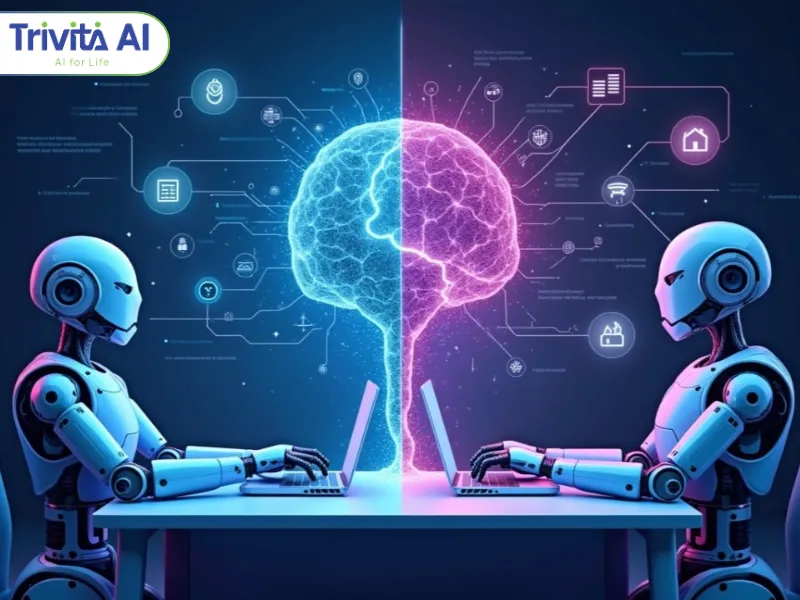
The role of artificial intelligence as a foundational infrastructure of the modern economy, influencing growth, labor markets, healthcare systems and national competitiveness.
Role of artificial intelligence at the macro level
In its early stages, Artificial Intelligence was largely viewed as a supporting technology used in isolated enterprise applications or research environments. Today, the role of artificial intelligence has expanded significantly beyond technical implementation to become a structural component of economic planning and long-term national development.
An increasing number of governments and institutions now regard AI not merely as a productivity tool but as a new form of infrastructure comparable to electricity, transportation or telecommunications. This shift reflects a broader strategic recognition that AI is becoming a prerequisite for competitiveness in the digital era.
Artificial intelligence as a new economic infrastructure
AI as an ecosystem rather than a single system
Understanding the role of artificial intelligence requires recognizing that AI does not exist as a single product or standalone system. It operates as a layered ecosystem composed of energy supply, computational hardware, cloud infrastructure, foundational models and application layers that generate economic value.
Each layer depends on the others. Without stable computational capacity, scalable cloud services and reliable data governance, AI cannot be deployed at national or enterprise scale in a sustainable manner.
Economic value concentrates at the application layer
The direct economic return of AI does not primarily stem from model development alone. Instead, value emerges when AI is embedded into sectors such as healthcare, finance, manufacturing and services.
At this level, AI enhances productivity, reduces operational costs and enables new business models. Recognizing this layered structure prevents governments and enterprises from adopting a narrow strategy focused solely on model development while neglecting foundational infrastructure and ecosystem integration.
Role of artificial intelligence in labor and skills transformation
Restructuring rather than eliminating jobs
Public discourse often frames AI as a replacement for human labor. In practice, the role of artificial intelligence in the labor market is more accurately described as restructuring rather than elimination.
AI automates repetitive and rule-based tasks, allowing human workers to focus on responsibilities requiring judgment, creativity and complex social interaction. In many industries, AI adoption has increased demand for hybrid skill sets that combine technological literacy with domain expertise.
Expanding AI literacy across the workforce
Beyond specialized AI engineers, the ability to interact with, evaluate and supervise AI systems is becoming a general workforce competency. Skills such as effective prompt design, output validation and risk assessment are increasingly relevant across industries.
This development demonstrates that the role of artificial intelligence extends beyond technical professions and into the broader human capital ecosystem.
Artificial intelligence in critical sectors
Healthcare
In healthcare systems, AI supports large-scale data analysis, including medical imaging diagnostics and electronic health record management. The role of AI is not to replace medical professionals but to enhance diagnostic accuracy, accelerate decision-making and reduce administrative burden.
Finance and manufacturing
In financial services, AI contributes to risk modeling, fraud detection and service personalization. In manufacturing, AI improves supply chain optimization, demand forecasting and operational efficiency.
These applications illustrate how the role of artificial intelligence directly influences enterprise competitiveness and macroeconomic performance.
Strategic pillar for sovereignty and long-term development
An increasingly prominent trend is the recognition of AI as a component of technological sovereignty. Many nations are investing in domestic AI infrastructure aligned with local language, cultural context and regulatory frameworks rather than relying exclusively on global platforms.
This approach aims to strengthen data security, maintain economic autonomy and safeguard national interests in an increasingly AI-driven global landscape.
Recent developments indicate that Artificial Intelligence is no longer an experimental option. It is becoming foundational to economic development, labor organization and societal governance.
Countries and enterprises that clearly understand the role of artificial intelligence, invest strategically and implement AI within structured governance frameworks will secure sustainable competitive advantages over the long term.
The role of artificial intelligence is shifting from a supportive technology to a strategic infrastructure underpinning modern economies and societies. Its value does not reside in algorithms alone, but in how institutions integrate AI into operational systems, workforce development and long-term strategic objectives.
A holistic perspective on AI, rather than a fragmented or technology-centric view, will determine whether organizations and nations can harness AI sustainably in the future.
Source: aimagazine.com
